
We drove to Arkansas, Mississippi, and Tennessee in mid-November looking for information about Janet’s ancestry. Her people have been in the U.S. for over 300 years, first in South Carolina and Georgia. They eventually made their way to the three mid-south states noted above. We spent time in one museum, Iuka Mississippi, and at several cemeteries along the way. It was a successful trip in regard to information gathered, but we need to return to complete the work.

Janet’s family has lived in the town of Tishomingo, Mississippi for several generations. It is likely that she still has cousins in Tishomingo County (same name). The county is located in the northeast part of the state, not far from the Tennessee and Alabama border. Many of her people were farmers and several of the men have been preachers, including one of her great-grandfathers. The laid-back vibe masks the sometimes violent history of the place. We spent time in the old county courthouse, now a museum, looking for family records and found a lot, including high school yearbooks from the 1950s that had a number of great pictures of her older cousins. The staff at the museum were first-rate, extremely helpful, and very nice.
However, outside the courthouse is a Confederate heroes monument, erected in 1902, 37 years after the end of the Civil War. It is a reminder of what was not so long ago. This piece of stone was erected more to intimidate the black population and less so to commemorate those who died in the lost cause. Most Confederate monuments were not constructed until the early 20th century, a time when whites in the South were very concerned about keeping the African-American population in its place. There were lynchings in Iuka, the location of the old courthouse, in 1889 and 1906. In addition, lynchings took place in the nearby towns of Corinth and Pontotoc in 1896, 1902, 1903, 1906, and 1920. The last lynching in Mississippi occurred in 1955.

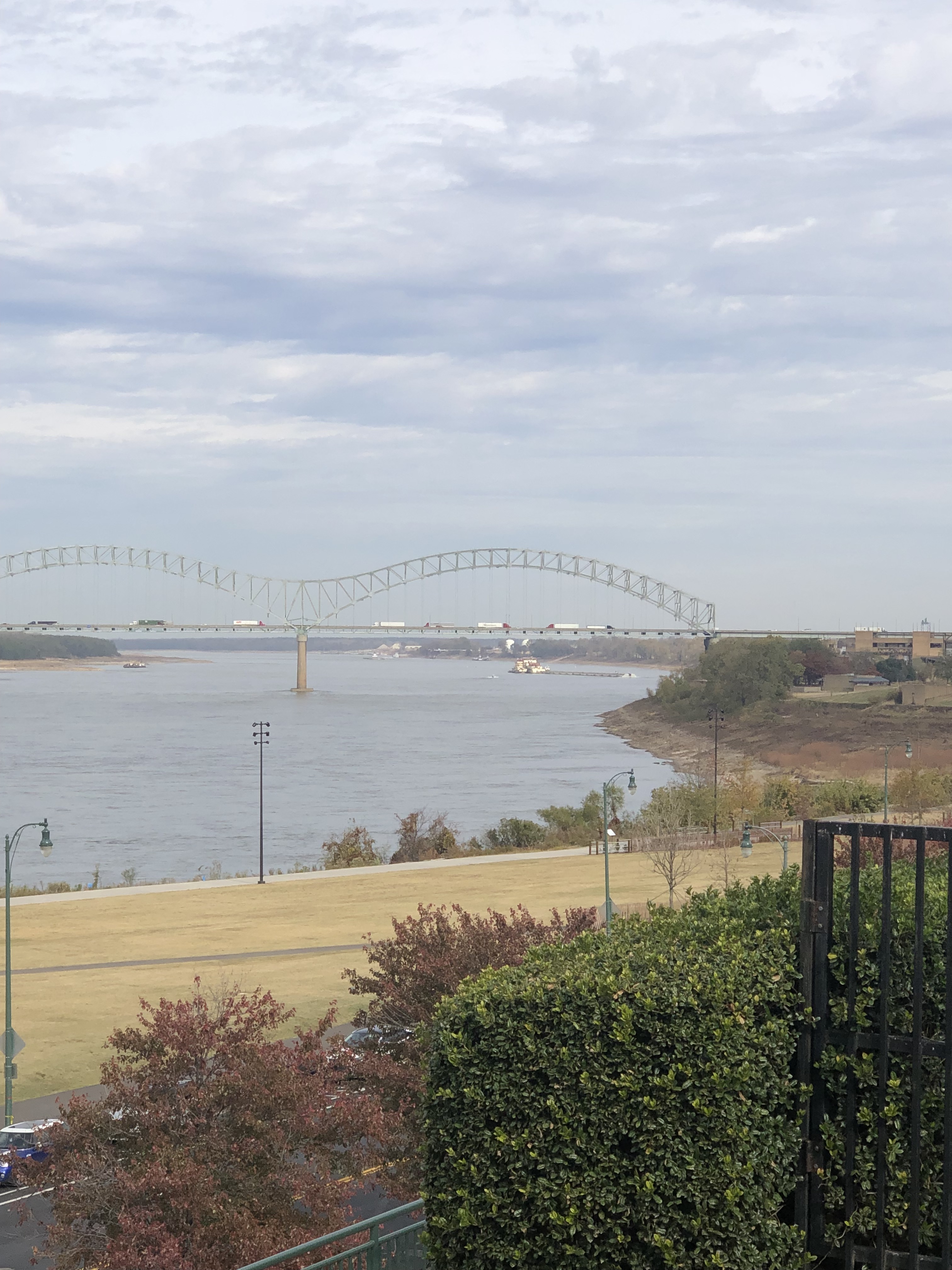
For us, travel to Tennessee usually means a stop in Memphis. Memphis is a special place for us. We met there. My first post was at Memphis State University, now the University of Memphis. We stopped at a collection of our favorite places including Beale St., W. C. Handy Park, Sun Records, and the River Front. I’ve never seen the river this low.


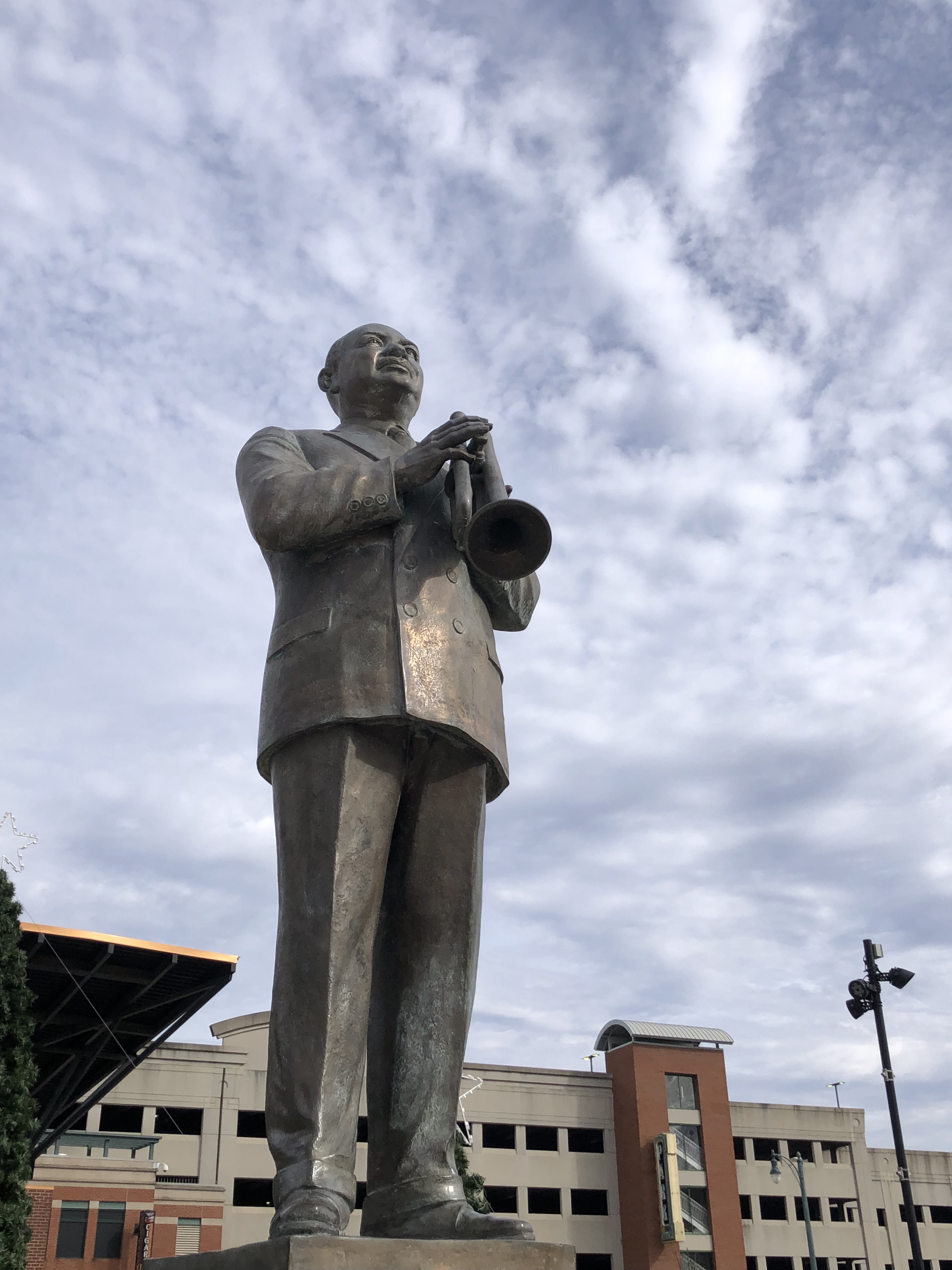
W. C. Handy Park is a special place for me. Handy is often referred to as the Father of the Blues. He is also known for his signature song, “St. Louis Blues.” He was born in Florence, Alabama, and was famous throughout the U.S. and Europe. Later in life, he moved to New York City. He died there in 1958, age 85. He was so popular at that time that more than 25,000 mourners jammed the streets around the church in Harlem that hosted his funeral. He is buried at Woodlawn Cemetery in the Bronx, only about 150 feet from my grandmother’s grave in the Ardovino plots at the cemetery.
 The Traveling Dean (Emeritus)