It was good to be back in Santiago with my eye clinic friends. I still don’t have many skills to offer, but they do. Their dedication, they’ve been offering clinic services for the last twenty years, is contagious. Plus, there are ways in which I can contribute to our team. At the end of each day, I found myself smiling as I thought about the nearly 200 patients we had seen that day. This year we provided services to nearly 1,200 patients, including 350 among the two bateys and one orphanage visited. Even with my limitations, I’ve never done any work that was better.
This year’s visit began in Puerto Plata, a resort-dominated city about two hours from Santiago. Our arrival on Valentine’s was exciting given that it also was the day after Fat Tuesday and people were still partying. In addition, political rallies had spilled out into the streets bringing our van to a halt a few times. The national election won’t occur until early May, but municipal elections were slated for Sunday, February 18. By law, the political rallies, they call it proselytizing, had to cease by midnight February 16. Candidates were getting the last of their electioneering in a most festive way.





The main clinic is a hopping place. Patients begin to line up at 3:30 am for an 8:00 am start. Upon arrival they receive a number signifying their place in line and then sit around in the chilly night air until the rest of the team arrives. Things get going at 8. Patients are checked-in, and a visit record is initiated. Many patients have been seen by clinic professionals before. The new visit-specific record is added to the old ones. They carry their files with them for the entire visit. Some of the files are nearly one inch thick, reflecting the fact that they are our repeat customers.

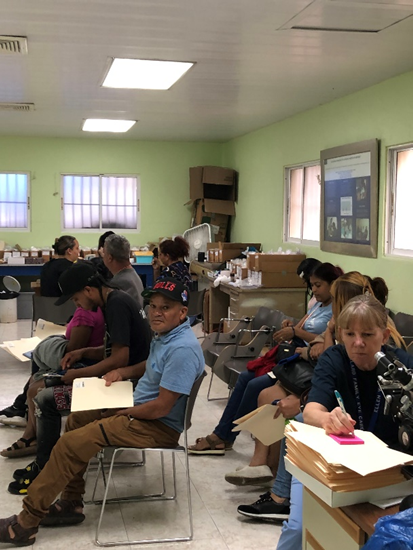

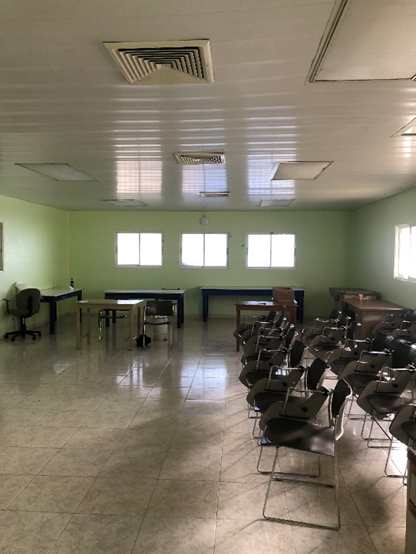
Upon entry into the clinic, most patients have their eye pressure checked, tonometry, although in some cases that part of the process begins in the external entryway. Then they are seated in order and wait for the next stage of the process.
Patients move to a small room where an autorefractor is used to measure how light is refracted from their eyes. Important information is produced at this stage. A suggested corrective lens “strength” is identified, and they move on to seeing an optometrist where the detailed examination occurs. Some patients have very bad vision and will need a special-order pair of glasses. A few others are referred for corrective surgery (e.g., cataracts) which occurs when another group of doctors arrives in March.
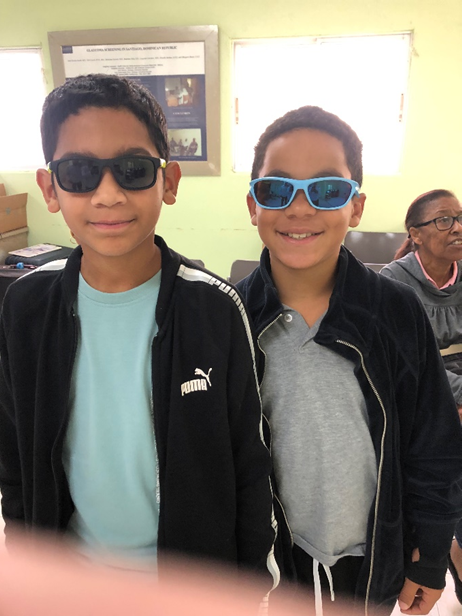
The sunglasses stage, which is where I work, is next and a happy place to be. There is a lot of joy and the sense that the process is almost over. It’s where I sometimes have an opportunity to take pictures of children in their new pair of shades. The last stage in the process is with opticians. Data from the examination and visual acuity testing are used to make the best decisions for corrective lenses. Glasses are selected and fitted while music plays in the background. It’s a festive environment and just about all of the patients leave happy and smiling because they can see more clearly.

 The Traveling Dean (Emeritus)