We drove to Denver in mid-October primarily to attend the Global Down Syndrome Foundation, Be Beautiful Be Yourself Fashion Show. It’s a big fundraiser for the Down Syndrome community. We had been invited by our friends Lou and Kathi Rotella to join them and we did. I have a number of cousins in the Denver area, the vestiges of my family’s history in Colorado. My grandparents (my father’s parents) moved to Louisville, nice name, Colorado in the 1930s. My grandfather was chasing coal. He eventually worked in mines in Louisville and Superior until the coal in the Denver Basin became too expense to mine. When we made our plans to travel to Denver, I reached out to my cousin Howard and his wife Lexie, asking if we could meet up after the gala. They said yes and we did. We had a great time with them.
We hadn’t driven to Denver in a long time and it was nice to retrace a route that we covered many times while my father was still alive. Yes, the route is uphill, slowly at first. Janet and I live in Waterloo, NE. Our house is 1,140′ above sea level. Driving west to Lincoln, NE, we only rise 61′. By Kearney and North Platte, both in Nebraska, the climb is to 2,152′ and 2,802′, respectively. The uphill climb then really picks up and by the time we arrived in Julesburg, CO, we were at 3,478′. Then, it was nearly 500′ uphill to Sterling, CO (3,939′) and 300′ more to Ft. Morgan (4,255′). The Sheraton Hotel in Denver, our home for the next two nights, is 5,320′ above sea level.
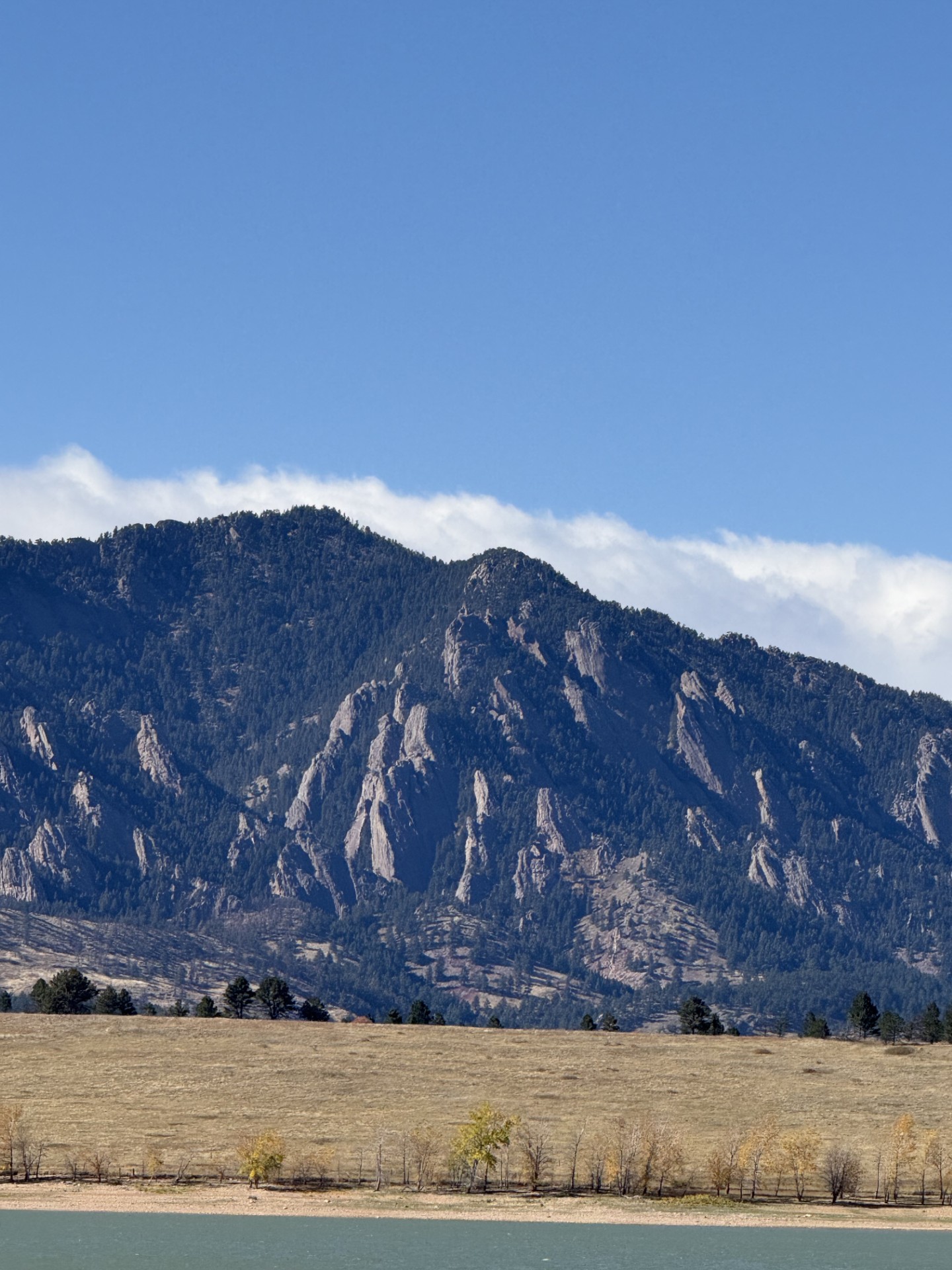
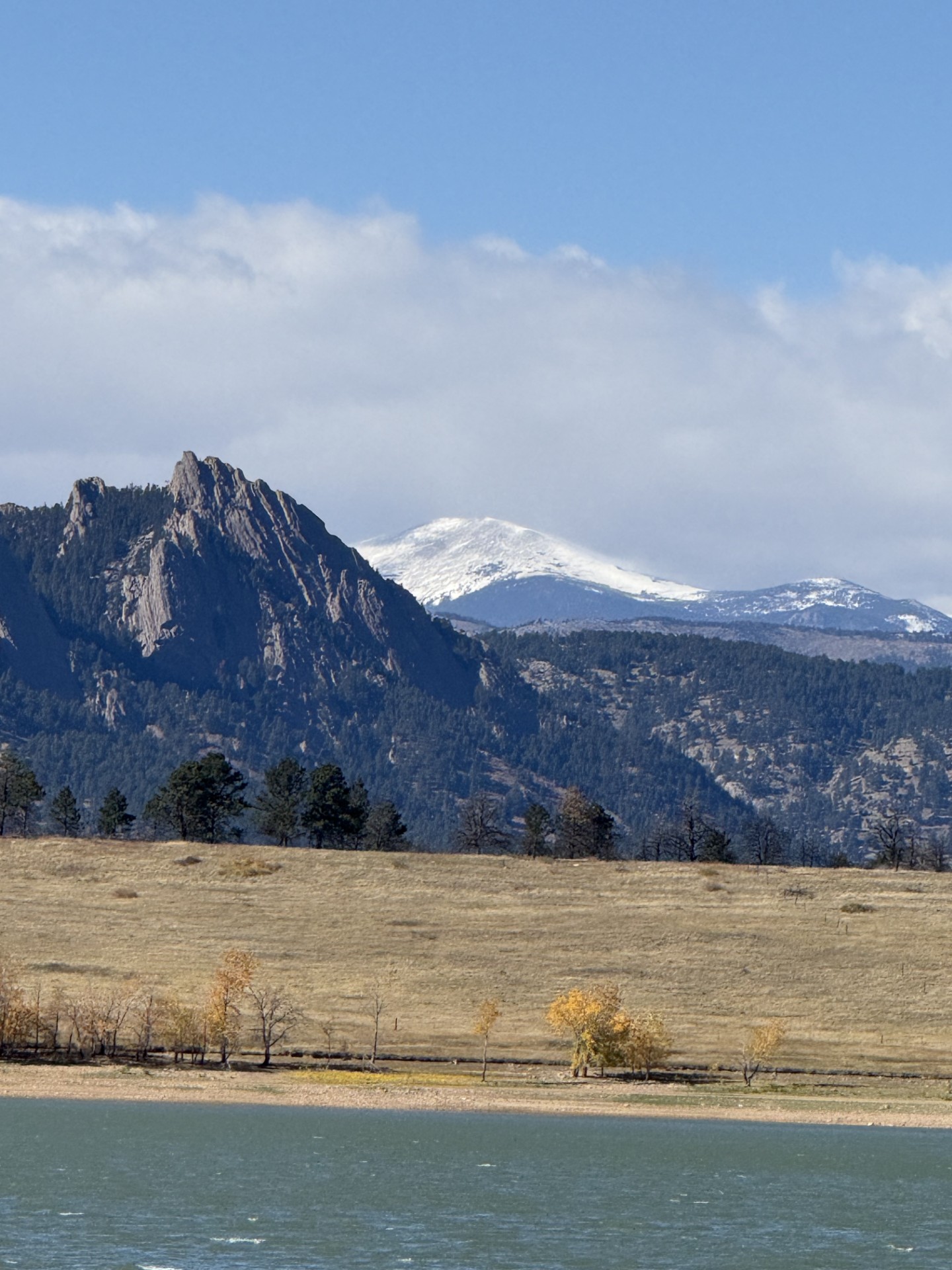
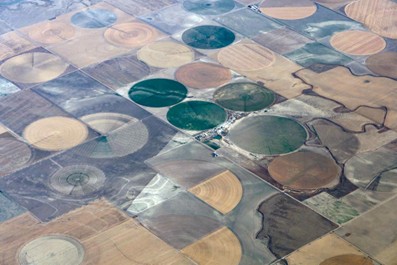
The roadside view from the 80 travelling west to Denver changes a lot along the way. Areas at our end of the state are dominated by cropland with some ranchland (cattle). It turns into rangeland and sandhills—in the western part of the state—it’s a lot dryer out there. The corn gets smaller, we’re used to those 7′ stalks. Sorghum is much more prevalent. Sorghum is an all-purpose plant, much like corn, and is used as human food, animal vittles, and biofuel. It’s a cool looking plant as well. By the time we reached the Colorado border, it was very clear that we were in a much dryer zone, one that did not support much cropland. There is one exception, however, winter wheat. Center pivot irrigation has supported wheat crops in eastern Colorado for many years. You’ve probably seen the evidence, crop circles you saw driving through or flying over. What a sight! Winter wheat is planted in September-October and nursed through a growing cycle until the weather gets cold. Then it goes dormant, taking a winter snooze until the spring warmth brings it back to life. At that point, it begins to grow again until it is harvested later in the spring.

About the time we arrived in Denver, we learned that a No Kings march was scheduled for the next day. The march was to start at the state capital, which was only three blocks from our hotel. We joined the march the next day. No, we did not get paid by George Soros or anyone else to do it. No, the crowd was not just a bunch of old geezers and burned-out hippies, as some have contended with no evidence. There were young and old, all brought together by the fear of authoritarianism that we are witnessing today. It was an upbeat group, no violence, and there was a very positive vibe. There were no tiki torches and no chants about being replaced, whatever that means.


 The Traveling Dean (Emeritus)